Skip to main content
About
Staff
Opportunities
Exhibitions
Current Exhibitions
Past Exhibitions
Publications
Programs
Events
Black Box Projects
Artist Talks
2022 Beall Center Art + Ecology Series
2023 Beall Center Art + Technology Series
Support
Donate
Donors + Sponsors
Partnerships
CTSA
Exhibitions
2023-2024
E.A.A.T. Experiments in Art, Access & Technology
September 30, 2023
to
January 13, 2024
Katherine Behar: Ack! Knowledge! Work!
February 03, 2024
to
April 20, 2024
Future Tense: Art, Complexity, and Uncertainty
August 24, 2024
to
December 14, 2024
2022-2023
Computational Poetics
October 01, 2022
to
January 14, 2023
Difference Machines: Technology and Identity in Contemporary Art
January 28, 2023
to
April 29, 2023
Expanded Ecologies
May 20, 2023
to
June 10, 2023
2021-2022
Ian Ingram
October 09, 2021
to
March 05, 2022
Vera Molnár: Variations
April 02, 2022
to
August 27, 2022
2019-2020
American Monument
October 05, 2019
to
March 16, 2020
2018-2019
R. Luke DuBois
September 29, 2018
to
February 02, 2019
Christa Sommerer & Laurent Mignonneau
February 09, 2019
to
May 25, 2019
2017-2018
Drawn from a Score
October 07, 2017
to
February 25, 2018
It Passes like a Thought
March 03, 2018
to
May 26, 2018
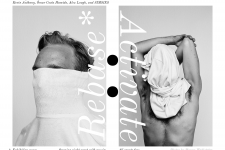
Rebase: Activate
June 01, 2018
to
June 10, 2018
2016-2017
Embodied Encounters
October 01, 2016
to
January 21, 2017
Masculine ←→ Feminine
January 28, 2017
to
May 13, 2017
2015-2016
An Interdisciplinary Symposium
Objects of Wonder
October 03, 2015
to
January 23, 2016
Wetware: Art | Agency | Animation
February 06, 2016
to
May 07, 2016
2014-2015
Eddo Stern: New Works
October 10, 2014
to
January 24, 2015
Play: In Three Acts
February 07, 2015
to
May 23, 2015
2013-2014
Sight & Sound
October 03, 2013
to
January 25, 2014
Wall of Sound: New Work by Zimoun
February 06, 2014
to
May 03, 2014
Origins of Life: Experiment #1.x
June 05, 2014
to
July 02, 2014
2012-2013
DataViz: Information as Art
October 04, 2012
to
January 26, 2013
"Evidence..." Works by Paul Vanouse
February 07, 2013
to
May 04, 2013
2011-2012
eyecode: Works by Golan Levin
October 05, 2011
to
January 22, 2012
MORPHONANO
February 02, 2012
to
May 27, 2012
2010-2011
Pulse Show: Rafael Lozano-Hemmer
September 30, 2010
to
January 21, 2011
Inflatable Bodies: Chico MacMurtrie
February 03, 2011
to
May 07, 2011
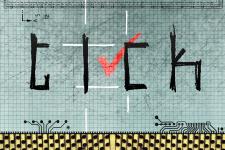
Tick
May 26, 2011
to
June 10, 2011
2009-2010
Media Alchemy: Nam June Paik
October 01, 2009
to
December 05, 2009
Emergence: Art and Artificial Life
January 08, 2010
to
May 07, 2010
2008-2009
Constant World: Jennifer and Kevin McCoy
October 03, 2008
to
December 07, 2008
Scalable Relations
January 09, 2009
to
March 14, 2009
EX-I-09
April 03, 2009
to
June 06, 2009
2007-2008
STRANDED SUBJECT(WEEKENDS)
August 06, 2007
to
August 17, 2007
Grand Text Auto
October 04, 2007
to
December 15, 2007
in a thousand drops…refracted glances
January 10, 2008
to
March 15, 2008
LIVE
April 03, 2008
to
June 07, 2008
2006-2007
Quantizing Effects: The Liminal Art of Jim Campbell
September 22, 2006
to
December 02, 2006
ALAVs 2.0 (Autonomous Light Air Vessels)
April 03, 2007
to
June 09, 2007
Atmospherics/Weather Works: Andrea Polli
April 06, 2007
to
June 06, 2007
2005-2006
Five(5)
October 04, 2005
to
December 10, 2005
"5 'til 12" Knifeandfork
January 16, 2006
to
March 15, 2006
Nicking the Never: Marina Zurkow
April 06, 2006
to
June 06, 2006
2004-2005
Demotic ... of or pertaining to the current ordinary everyday form of a language; of or pertaining to the common people.
July 29, 2004
to
July 31, 2004
ALT+CTRL A Festival of Independent and Alternative Games
October 05, 2004
to
November 24, 2004
OP_ERA Daniela Kutschat and Rejane Cantoni
April 26, 2005
to
June 11, 2005
2003-2004
Through the Eye of the Wolf
September 26, 2003
to
October 26, 2003
Screen Series
November 12, 2003
to
December 13, 2003
A.M. Hoch - Mitosis: Formation of Daughter Cells
January 06, 2004
to
September 10, 2004
Mapping the Unfindable
March 02, 2004
to
April 24, 2004
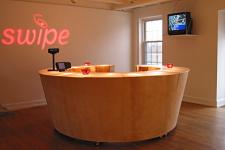
Swipe: Brooke Singer, Beatriz da Costa, and Jamie Schulte
March 09, 2004
MOISTURE (Phase 2) Claude Willey, Deena Capparelli, Bernard Perroud, Mark Tsang, and Adam Belt
April 27, 2004
to
April 28, 2004
Active Space: Interactive Videodance Lisa Naugle and John Crawford, with Frederic Bevilacqua
May 13, 2004
to
May 22, 2004
Hybrid Vigor: Graduate Exhibition in Arts, Computation and Engineering (ACE)
June 04, 2004
to
June 19, 2004
2002-2003
Curious Orange
April 06, 2003
to
June 06, 2003
2001-2002
Reading Frankenstein
June 15, 2001
The Predator
October 06, 2001
to
February 06, 2002
Frames
February 06, 2002
to
May 06, 2002
The Dream of the Audience
June 06, 2002
to
July 06, 2002
2000-2001
SHIFT-CTRL
October 06, 2000
to
December 20, 2000
Ghost Catching
February 06, 2001
to
May 06, 2001
Microepiphanies
April 08, 2001